
Speculative Post
What is technology supposed to do for emergency management?
The following post is from the perspective of a single individual and does not directly reflect the views of the SIG as a whole.
As a new tenure track researcher in the information science realm, I am supposed to be pushing the bleeding edge of discovery, pushing technology further, and relentlessly seeking “progress.” I find; however, that I am not concerned with pushing the edge insomuch as I am interested in broadening, strengthening, and better integrating technology into human cultures. Since my research domain is human-computer interaction specifically and emergency management (EM) generally, I am interested in how to undo, approach, or work in a domain marked not by its technical prowess, but by its ability to get things done when nothing works. It is a design space that many of my colleagues ignore (not usually on purpose) for a very specific reason.
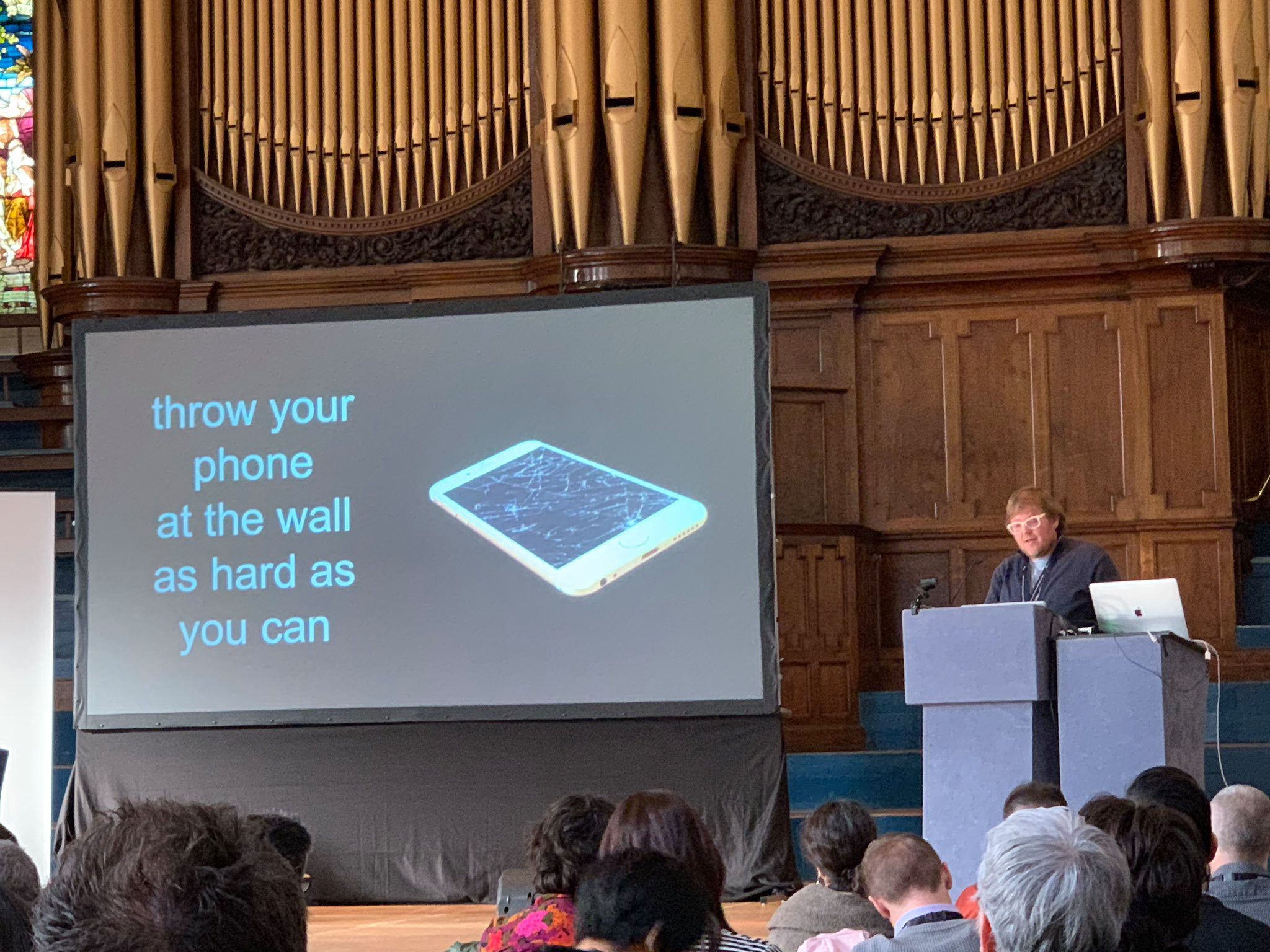
A good example of this is looking to how technology might shape the future of EM. I gave a talk in 2019 in Nottingham about what a fictional world of Search and Rescue might look like should technology be integrated successfully with Search and Rescue (SAR) operations (PPT file, PDF file). The above image is from that talk. During the slide in question, I outlined the design space for technologists who want to work within an EM environment. Imagine a design space where everything is broken. Electricity may be in and out, connectivity is non-existent, and any stability that can be expected in a ‘normal’ environment is completely gone.
And that is at ground zero (I realize this is not always the case). This is where design should be targeted.
Add to that a complicated asymmetrical array of access, resources, and needs, and it gets even more complicated. For base camps, ICPs, or EOCs, the technical needs for these centers varies wildly but also needs to be compatible, fast, low power, simple to use, and as unbreakable as possible. This all must allow for a chain of unbreakable, easily extensible, and connected technologies that range from a SAR team member on the ground all the way back to the EOC regardless of the rurality or urbanity of the theater in question. If we attach these needs to current technology, literally nothing can be integrated, at all. Current technology, especially bleeding edge technology, is not compatible with unstable environments like those of a large-scale disaster. And this is a difficult issue to discuss because if it is not compatible with unstable environments, then what exactly is technology doing for society as a whole?
It is no controversy to say that current technology (computers, mobile devices, and everything in between) cannot live within the world that created it. Current technology’s planned obsolescence is incompatible with long term cultural resilience, city planning, disaster planning, and being useful inside of theaters of operations where EM is attempting to re-establish stability when it has failed.
And if technology is not compatible with or able to enhance the resilience of a municipality, organization, building, or business, then how can we strive to create an EM that is integrated with technology?
Technical Literacy
The term, “technical literacy” or “computational literacy” or “data literacy” all refers to this belief that the ability to use, understand, evaluate, create, and apply things from technology is similar to that of writing and reading. However, the nature of this concept is slightly more complicated. Writing and reading is a skill that can be adapted for any situation. It allows us to enhance resilience because it fosters training, learning, calling for help, and other ways we use those things. We need literacy for other kinds of things, even computers.
Yet, if technology is not able to be used in this way. Technology is created to support tasks and that task is codified according to the talent, understanding, and resources available to a design team. It is important to note that yes, there are numerous examples of unanticipated use with unanticipated being the operative term. Yet all of this is within the confines, affordances, and abilities of users (despite or in spite of the limits of the designers). With so many limitations that are predicated on so many interpretations of the task, the design, and intended use, can we call this literacy? Is a more appropriate term simply, “use a system well?” And more than that, how can we call to the concept of literacy as anything more than an act of use that takes place within a stable environment? We could call to an understanding of what is happening within a device, those actions taken by processors and memory before being shown what is on a screen but this is closer to understanding how a car works than literacy. It’s nice but not necessary.
And so in thinking about literacy, there are innumerable other concepts to cope with. Literacy is not a goal, it’s a term for a massive shift in practice from both EM’s perspective but also technology’s perspective. For technology to be integrated with EM, we need to not only move away from the concept of literacy, but push back on the way that technology itself is created, meant to be used, sold, and designed.
This post ends with a list of questions to think about when considering “how” to integrate tech with EM. The most important of those is, “What would it even do?”
Below is a collection of 24 questions that need to be answered as we strive to integrate tech with EM. Within answering each of these is an additional collection of difficult questions. This list is not exhaustive.
Infrastructure
- What are the data needs of any given disaster?
- Do those data needs differ by type of disaster?
- How are those data needs influenced by the geography of the impacted area?
- Given those data needs, what is the pipeline needed to ensure the data’s storage, accessibility, verifiability, processing, and analysis?
- Within those needs, how does one ensure an adequate cycle of version control?
- Does version control need to consider platform (mobile, desktop, laptop, etc…) compatibility?
- How should permissions be integrated within this pipeline?
Verifiability, Provenance, and Protection of Data
- Given the prevalence of misinformation, how does one integrate the security of information within existing ICS frameworks, not cybersecurity but its provenance?
- How does one protect data from being altered to fit political events within the effected area?
- How can this data be available for the crowd to process without sacrificing bandwidth?
- How can these data be constantly verified within an asymmetrical environment wherein different actors are engaged with the data at different times simultaneously but perhaps not all on the same version?
- How does one incorporate version control and the push/pull dynamic without causing dataset destroying conflicts?
Base Operations
- Right now, nearly all of the EOC software packages are closed and private in terms of source control. How do you grow open source software that can accomodate this asymmetrical space?
- Within that movement, how do you handle current EOC software and licenses/fees that have been purchased already?
- How do you handle training for existing personnel should technology begin to be integrated.
- Most importantly, how can you ensure that the information coming from the data warehouse is valid and vetted properly?
- With the above, how can you control for the impact of automated misinformation when personnel may be psychologically unable to ingest, verify, or cope with?
- How can you tie everyday Incident Management and large-scale Emergency Management information systems together if they’re separated?
- More importantly, how can you scale those systems to incorporate national information systems, journalist systems, allow crowdsourcing to access, and cope with crowd-based platforms and communities that have far more resources than any municipality can compete with?
- How can social media be incorporate in standard communication practices but also in standard sensemaking and situation awareness toolkits?
- Can messaging apps from social media (e.g. Facebook Messenger, TikTok, Instagram, Twitter DMs) be incorporated into data gathering tools in an effort to broaden an ability to connect to those who may be in danger?
Personnel
- What would a future that is successful with computational techniques look like in terms of representation?
- Would existing personnel need to be replaced with folx who have the training to deal with these things?
- And if so, how do you compete with technology industry salary ranges that begin far outside any municipality’s salary range?
What other questions, barriers, or gates need to be confronted?
Other Post Formats
SPECULATIVE
integration perspective tech-sector